A note from the bench
A craft that has not changed its method in over a century.
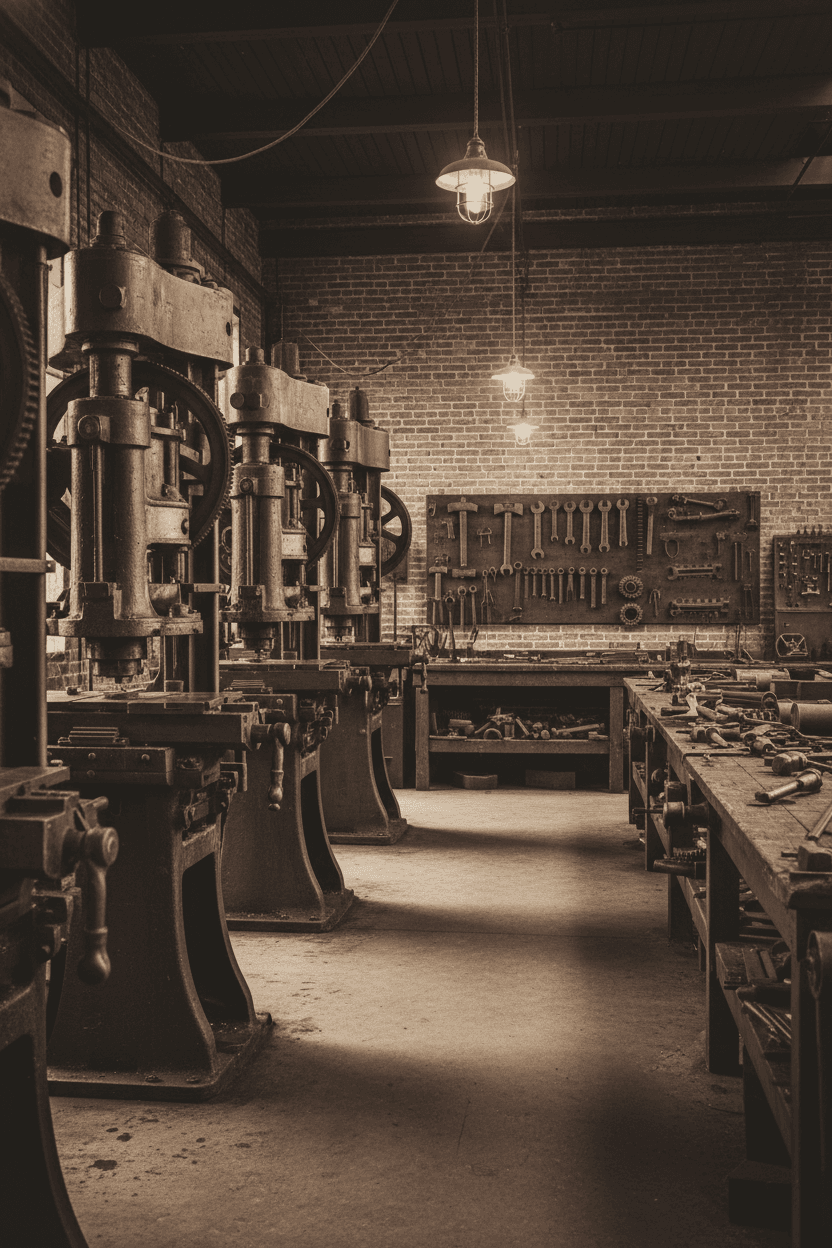
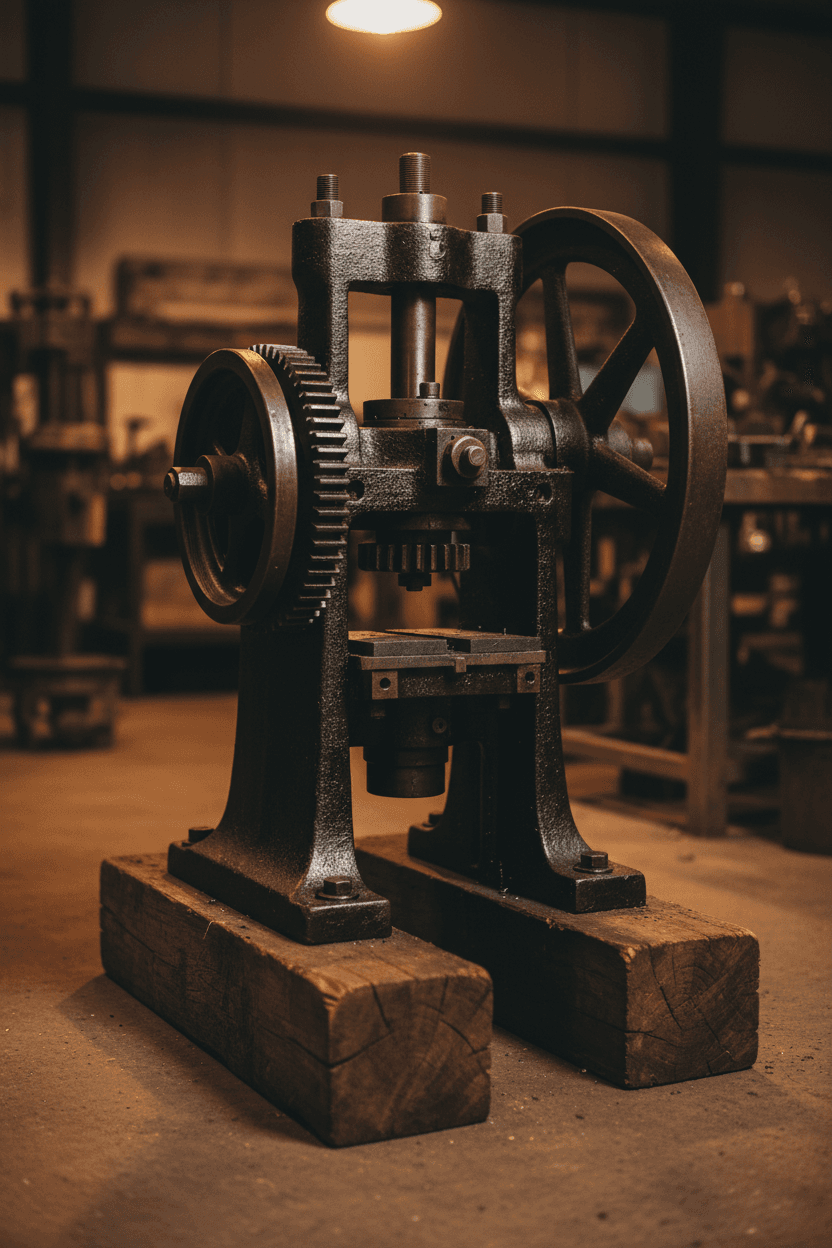
The Duplex presses run on original Birmingham tooling. The borosilicate glass formula has not changed. The brass alloy has not been reformulated. What has changed is only the address on the invoice.
A catalog built over decades
Made in Melbourne & India. Collected for decades. Now in North America.
What began as a collector's obsession became a manufacturing operation. When the components that made antique oil lamps worth restoring disappeared from the market, the only answer was to make them again — on the original tooling, with the original materials.
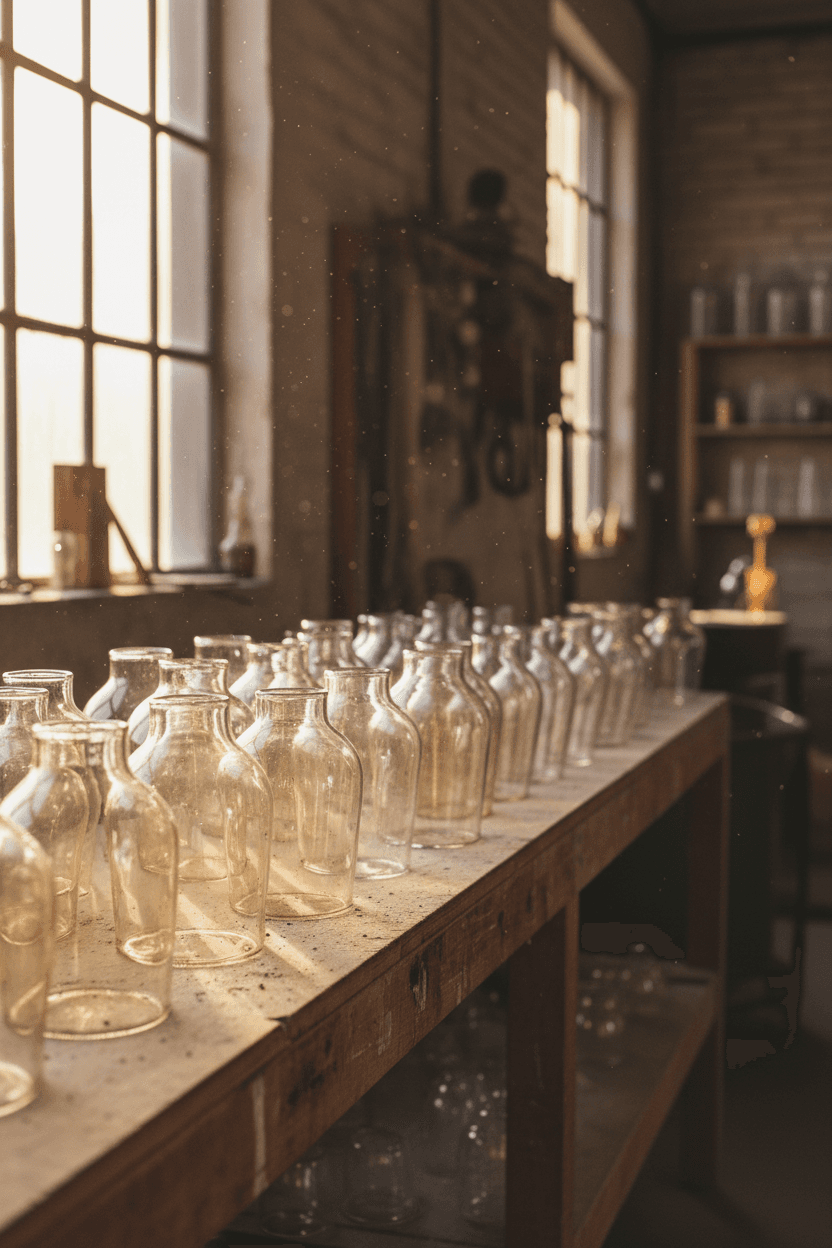
Original 100-year-old Duplex presses were sourced from Birmingham and put back into production in Melbourne. Shades, fonts, chimneys, and glassware are manufactured in India using moulds owned outright — over two decades of uninterrupted production. For years these pieces supplied collectors in Australia. Now, for the first time, the same catalog is available in North America.
Pressed on original dies
Our Duplex burners run off the original Birmingham tooling — over a century old and still in production.
Owned moulds, not licensed
Every mould and tool used in India is owned outright. Nothing is contracted out to a third-party die shop.
Borosilicate, not substitute glass
Shades, chimneys, and fonts are produced in borosilicate glass to the original period specification.
A working timeline
One hundred and fifty years, one method.
- c. 1870s
Victorian golden age of oil lamps
The duplex burner becomes the standard for domestic lighting across Britain and its colonies. Birmingham becomes the centre of lamp manufacturing.
- c. 1880s
Birmingham tooling forged
The presses, dies, and moulds used to produce Duplex burners are manufactured in Birmingham. These are the same tools still in use today.
- c. 1920s
Collecting becomes obsession
As electric light displaces oil, antique lamp components become collector items. The original tooling is preserved rather than scrapped.
- c. 2000
Original Birmingham tooling acquired
The Oil Lamp Company is offered the original Birmingham presses and dies — over a century old. They say yes, ship them to Melbourne, and begin production again.
- c. 2000s
Duplex Burner made again in Melbourne
Running on the original tooling, the Melbourne workshop begins producing Duplex burners to the original specification. Supply goes to Australian collectors.
- Ongoing
India: shades, fonts, glassware
Shades, chimneys, fonts, and glassware are manufactured in India using moulds owned outright by the Oil Lamp Company. Over two decades of uninterrupted supply.
- 2026
North American launch
For the first time, the same catalog that has supplied Australian collectors for over two decades is available in North America through Acme Vintage Supply.
Begin where the light is